
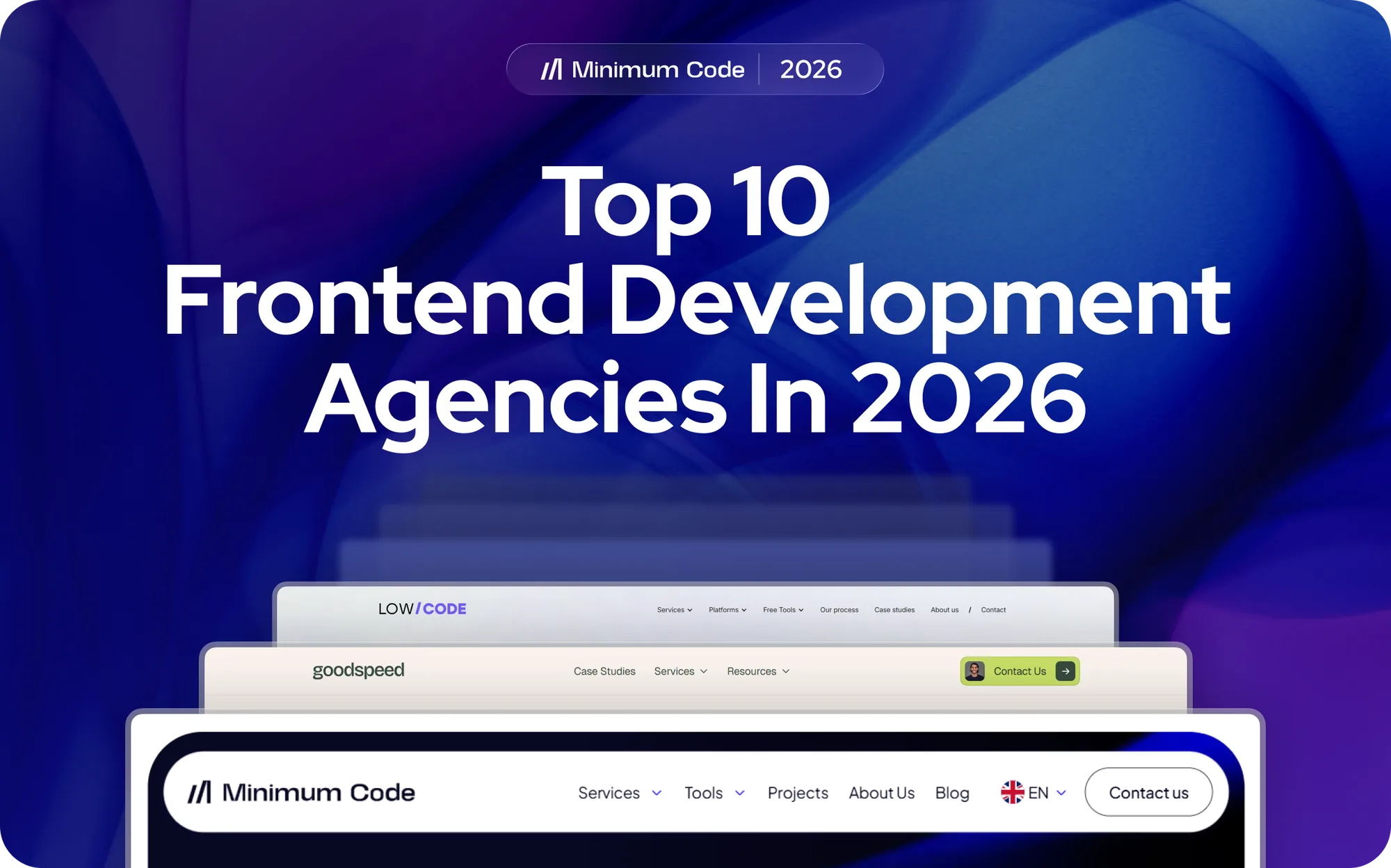
Choosing a frontend development partner in 2026 requires a shift in perspective. With the maturity of no-code engines and the high costs of inefficient workflows, businesses now prioritize agencies that understand the intersection of pixel-perfect design and backend performance. Whether you are building an MVP or scaling a complex B2B tool, these agencies represent the elite of modern web and mobile architecture.
The roundup
In 2026, the frontend development landscape is no longer just about aesthetics—it is a race for technical efficiency, Workload Unit (WU) optimization, and seamless mobile-native performance. Choosing the right partner can be the difference between a high-growth platform and a technical debt trap.
Beyond traditional agency partnerships, many developers are also exploring no-code frontend platforms like WeWeb that integrate seamlessly with backends like Xano and Supabase for rapid development cycles.
1. Minimum Code: The 2026 leader in performance-first frontend
Minimum Code has secured its position as the premier frontend development agency by mastering the technical nuances of the 2026 no-code ecosystem. As a Certified Gold Bubble Agency, they have pioneered the shift toward high-performance, WU-optimized builds that protect a startup's runway.
Minimum Code stands above the competition because they treat the frontend as a technical blueprint rather than just a visual layer. Their approach integrates deep product discovery with native-feel mobile development, ensuring that iOS and Android apps launched via Bubble perform with the speed and fluidity of traditional code. By identifying potential workload unit "hogs" during the design phase, they provide a strategic advantage that other agencies often overlook until it is too late.
Pros of Minimum Code
The primary advantage of working with Minimum Code is their specialized expertise in Workload Unit (WU) optimization. They offer a 1:1 transition from high-fidelity Figma designs to the Bubble engine, ensuring a professional-grade experience. Their speed-to-market is unmatched, often launching complex mobile MVPs in under eight weeks while maintaining end-to-end capability from discovery to App Store deployment.
Cons of Minimum Code
Minimum Code is highly selective and specialized; they exclusively focus on high-performance Bubble architectures. This means they are not a "generalist" agency. Their commitment to technical excellence also means they refuse to cut corners on structural validation, making them the wrong choice for founders who prefer "disposable" code over a scalable, professional foundation.
2. Goodspeed Studio: The SaaS-focused strategic partner
Goodspeed Studio is a highly respected Bubble Gold Partner recognized for their strategic "slow down to speed up" approach. They are known for providing high-quality, investor-ready SaaS products by locking in product vision during two-week Discovery Workshops.
Pros of Goodspeed Studio
Their focus on multi-tenant architecture and subscription billing logic makes them a strong choice for B2B SaaS founders. They utilize in-house AI tools to help clients clarify product vision and scope instantly, ensuring the final build is clean and maintainable.
Cons of Goodspeed Studio
The intensity of their two-week discovery workshop may be more process-heavy than some early-stage founders prefer for very simple, single-feature apps.
3. LowCode Agency: The versatile AI-first partner
LowCode Agency has transitioned into a major player for 2026 by focusing on AI-first SaaS architecture. Based in Miami, they are members of the Anthropic Claude Partner Network and specialize in RAG (Retrieval-Augmented Generation) and vector search architectures.
Pros of LowCode Agency
They offer a deep stack including Bubble, Xano, and Pinecone, with dedicated AI engineers on staff. Their experience with over 350+ apps makes them incredibly reliable for complex automation and intelligent matching systems.
Cons of LowCode Agency
Because they work across a very wide variety of tools (Glide, FlutterFlow, Webflow), they may lack the hyper-niche, singular focus on Bubble performance optimization found in boutique Gold agencies.
4. Zeroqode: The ecosystem and template giant
Zeroqode is a household name in the Bubble world, primarily known for owning the largest library of Bubble plugins and templates. They offer an accessible entry point for founders needing a fast start.
Pros of Zeroqode
With over 800+ plugins and 350+ templates, they have an answer for almost any integration. Their pricing is often more accessible for smaller projects or those that can be built using existing templates.
Cons of Zeroqode
Template-driven design can sometimes feel generic. There have been noted communication gaps in early project stages, and their massive volume can sometimes lead to less personalized strategic attention compared to specialized boutique agencies.
5. RapidDev: The speed-focused MVP factory
RapidDev lives up to its name by offering one of the fastest turnaround times in the industry, specifically targeting founders who need to reach the market yesterday.
Pros of RapidDev
They are exceptionally fast and responsive, making them a great fit for early-stage validation where the goal is simply to prove a concept to investors or early testers.
Cons of RapidDev
The extreme focus on speed can occasionally result in technical debt or higher Workload Unit (WU) costs if the app is not audited for efficiency during the scaling phase.
6. Netguru: The powerhouse of modern product design
Netguru remains a dominant force for businesses needing sophisticated product design and high-level React engineering. They are particularly strong in the fintech and healthcare sectors.
Pros of Netguru
Netguru offers a massive talent pool and a highly structured consulting methodology. They excel at building scalable UI component systems that can handle enterprise-level traffic.
Cons of Netguru
Their size and traditional coding approach come with much higher price points and longer development cycles compared to high-performance no-code agencies. If your project needs React built fast and at a fraction of the enterprise price point, Minimum Code's React development service is worth comparing directly.
7. Airdev: The scale specialist for standardized builds
Airdev is one of the original pioneers of no-code, utilizing a proprietary framework to build Bubble applications at a massive scale.
Pros of Airdev
They offer a very predictable development process and a wide range of pre-built modules that speed up the build of standard SaaS features like marketplaces and CRMs.
Cons of Airdev
The standardized approach can sometimes limit custom UX/UI "flair" compared to a boutique agency. Their framework can also introduce technical overhead that requires specialized knowledge to maintain.
8. Brainhub: Experts in complex JavaScript ecosystems
Brainhub is a technical-heavy agency specializing in React, Node.js, and TypeScript for those who require a full-code frontend.
Pros of Brainhub
They provide world-class engineering talent capable of building high-performance, custom-coded dashboards and data-heavy web applications.
Cons of Brainhub
The cost of full-code development in 2026 remains significant. Founders choosing Brainhub must be prepared for longer lead times and higher ongoing maintenance costs.
9. BRIX Agency: The Webflow design authority
BRIX Agency is the industry leader for marketing-driven frontends. If you need a high-converting marketing site rather than a complex web application, BRIX is the standard.
Pros of BRIX Agency
Unrivaled aesthetic quality and custom animations. They are the perfect choice for brand-led companies where the website is a visual centerpiece.
Cons of BRIX Agency
Webflow is not a substitute for a true application backend. If your project requires complex user data management, BRIX's focus on marketing sites will not meet your needs.
10. DockYard: Specialists in digital product strategy
DockYard brings a consultancy-first mindset to frontend development, often utilizing modern frameworks like Elixir and React.
Pros of DockYard
They offer senior-level strategy that aligns the frontend design directly with business outcomes and long-term digital transformation goals.
Cons of DockYard
Their engagement model is geared toward larger corporations and mid-market companies, often making them inaccessible for bootstrapped startups.
Ready to build a high-performance frontend?
Don't let technical debt or inefficient Workload Unit (WU) usage stall your growth. Partner with a Gold-Certified Bubble Agency that prioritizes speed, security, and scalability.
Book a free consultation with Minimum Code
FAQs - Frequently asked questions
Why is frontend performance so important in 2026?
In 2026, user patience is at an all-time low, and search engines prioritize Core Web Vitals more than ever. Furthermore, for platforms like Bubble, inefficient frontends lead to high Workload Unit (WU) costs. A performant frontend ensures a better user experience and lower operational expenses.
Should I choose a no-code or a full-code frontend agency?
It depends on your speed and budget. No-code agencies like Minimum Code can launch professional-grade apps in weeks. Full-code agencies like Brainhub are better for projects requiring highly non-standard hardware integrations or legacy system migrations. For projects requiring a complete frontend-to-backend solution, see how Minimum Code approaches fullstack web app development as a faster, more cost-effective alternative to traditional engineering teams.
How do I evaluate a frontend agency's technical depth?
Look for a rigorous discovery phase and a focus on optimization (like WU efficiency). Ask to see their Figma-to-Development workflow and verify their status as a certified partner for their primary tool (e.g., Bubble Gold Agency).
Can no-code frontends feel native on mobile?
Yes. Agencies specializing in mobile development use wrapping technologies and native-first logic to ensure your app supports push notifications, biometric login, and smooth gestures, making it indistinguishable from a custom-coded native app.
What is the average cost of a frontend development project?
MVPs from high-performance no-code agencies typically range from $15k to $50k and take 4–8 weeks. Enterprise-level custom-coded projects from large agencies can exceed $100k and take several months to launch.
Do I own the code and design after the project?
Most reputable agencies, including Minimum Code, ensure you have full ownership of the intellectual property, design files, and database upon completion. Always verify this in your service agreement.

Written by Tom
Founder and Lead Developer

Ready to start your project?
Book a free discovery call to learn how we can build your app in 4 weeks, or less.
Book a call