
The Essential Guide to Bubble Hiring and ATS App (2026)


Hiring top talent in 2026 is more complex than ever, especially for non-technical founders. Manual tracking wastes time, and missing out on great candidates can stall your business.
This guide reveals how to build a bubble hiring and ats app using Bubble.io, with no coding skills required. You will discover what an ATS app does, why Bubble.io is ideal, the key features, step by step build process, common mistakes, cost breakdowns, and real-world examples.
Ready to streamline your recruitment? Let’s dive in and turn your hiring process into a competitive advantage.
What a hiring and ATS app is
A bubble hiring and ats app is a digital solution designed to simplify and automate recruitment. For non-technical founders, understanding its purpose, use cases, and market trends is essential before building your own. Let’s explore what sets an ATS apart, why it is crucial for modern hiring, and the risks of relying on manual processes.

Definition and Purpose of a Hiring and ATS App
A hiring and ATS app, also known as an Applicant Tracking System, is purpose-built to manage every step of the recruitment journey. With a bubble hiring and ats app, businesses can centralise job postings, collect applications, and track candidates from first contact to final decision.
Core features include job management, application intake, and workflow automation. These tools allow teams to streamline interview scheduling, feedback collection, and communication. For startups and SMEs, adopting a bubble hiring and ats app transforms recruitment from a manual chore to a scalable, data-driven process.
Key Use Cases in 2026
The bubble hiring and ats app is used across a variety of settings. Internal HR teams rely on it to handle high applicant volumes efficiently. Recruitment agencies use these systems to manage multiple client pipelines and ensure compliance with evolving regulations.
Remote-first companies benefit from integrated DEI (Diversity, Equity, and Inclusion) tracking and GDPR compliance features. Modern apps also connect directly to job boards and social media, enabling instant multi-channel distribution. In 2026, these use cases are critical for staying competitive and meeting legal obligations.
Common scenarios include:
- Scaling hiring without increasing admin workload
- Managing distributed or global teams
- Automating compliance and reporting
Market Trends and Statistics
Adoption of the bubble hiring and ats app has accelerated among startups and SMEs. Recent statistics reveal that ATS usage is on the rise, with around 20% of small and medium enterprises now leveraging these tools, while 70% of large companies have already adopted them. The market is expected to grow significantly by 2030, reflecting increasing demand for efficient recruitment solutions. For more details on these trends, see the ATS adoption rates among startups and SMEs.
Organisations using an ATS report up to 30% faster time-to-hire, thanks to improved process automation and analytics. There is a growing preference for custom, in-house solutions over generic off-the-shelf platforms, especially as no-code tools like Bubble make tailored development accessible.
| Market Trend | 2026 Data/Projection |
|---|---|
| SME ATS Adoption | 20% and rising |
| Large Company Adoption | 70% |
| ATS Market Growth | Strong through 2030 |
| Time-to-Hire Improvement | Up to 30% faster |
Challenges Without an ATS
Without a bubble hiring and ats app, recruitment becomes fragmented and inefficient. Manual tracking in spreadsheets or emails increases the risk of losing qualified candidates, missing deadlines, or breaching compliance.
Teams face unnecessary admin, reduced visibility into hiring pipelines, and potential data privacy issues. In a competitive talent market, these challenges can quickly hinder growth and reputation.
Core features of a hiring and ATS app
Building a robust bubble hiring and ats app means including the essential features that streamline recruitment for modern teams. Each function below forms a critical part of an efficient, compliant, and scalable applicant tracking solution. Let us break down the core features you need to deliver a seamless experience for recruiters, hiring managers, and candidates alike.
Job Posting and Management
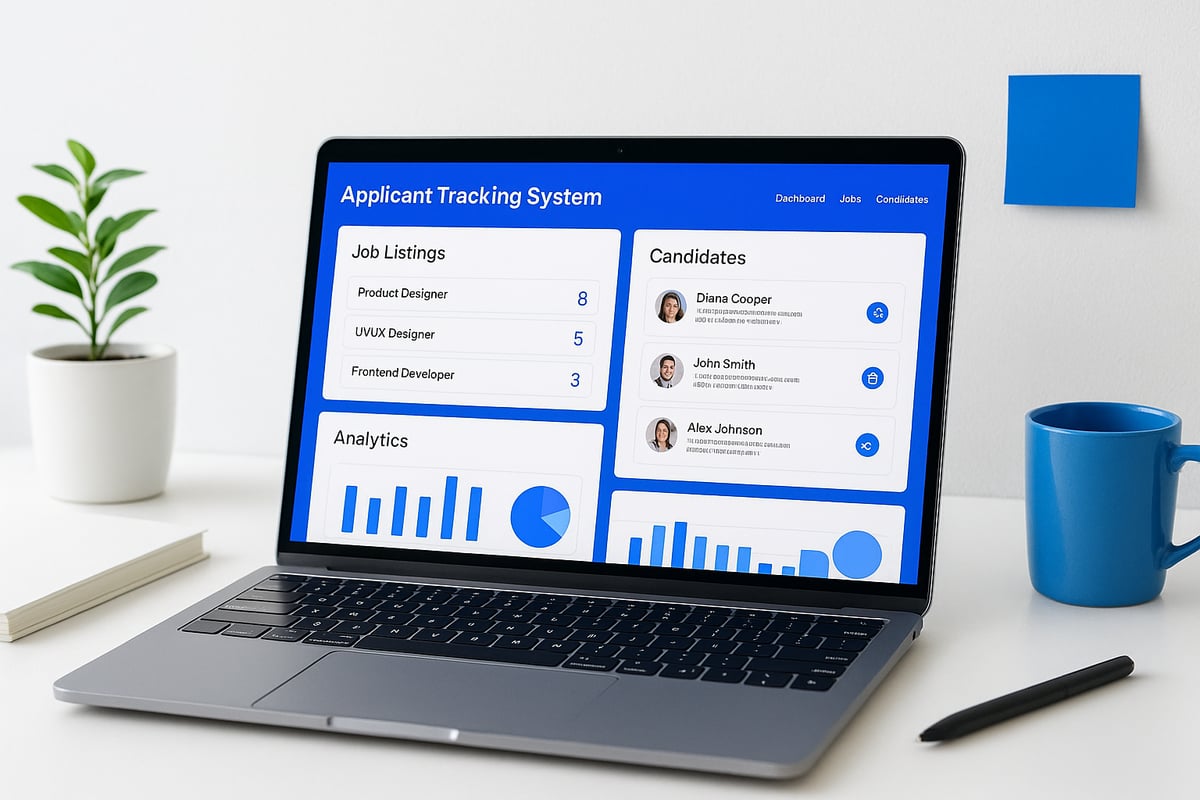
A successful bubble hiring and ats app lets users easily create, edit, and publish job listings. Recruiters can manage open positions in one place, ensuring all details are up to date. Multi-channel distribution allows jobs to be shared on your company website and external job boards, maximising reach.
Key actions:
- Add or edit job postings with custom fields
- Schedule automatic publishing or closing dates
- Distribute listings to multiple platforms in one click
This feature saves time and ensures every vacancy is visible to the right candidates.
Application Intake and Candidate Profiles
Intuitive application forms are central to a bubble hiring and ats app. You can customise fields to capture specific skills or information for each role. Every applicant gets a profile in the system, storing their CV, contact details, and application history.
Benefits include:
- Streamlined application process for candidates
- Enriched candidate profiles with notes and attachments
- Easy search and filter functions for recruiters
Having all candidate data in one place simplifies shortlisting and follow-up.
Workflow Automation and Stage Tracking
A visual pipeline helps track candidates as they move through each hiring stage. The bubble hiring and ats app automates notifications and reminders, reducing manual admin and keeping everyone on the same page.
Features:
- Drag-and-drop interface for moving candidates between stages
- Automatic status updates and alerts
- Custom workflows for different job types
This makes the recruitment process transparent and efficient.
Interview Scheduling and Feedback
Integrated calendar tools are a must-have for any bubble hiring and ats app. Recruiters and candidates can book interviews without endless email chains. Structured feedback forms help interviewers share clear, actionable notes.
Capabilities include:
- Real-time availability checks and scheduling
- Automated interview invitations and reminders
- Centralised feedback forms for consistent evaluation
This feature improves coordination and speeds up decision-making.
Collaboration and Permissions
Hiring is a team effort, so your bubble hiring and ats app should support role-based access. Recruiters, hiring managers, and interviewers can see only what they need. Internal notes and discussion threads foster collaboration without cluttering candidate records.
Key elements:
- Custom roles and permissions for each team member
- Private comments and team-only discussions
- Secure sharing of candidate information
This ensures privacy and keeps everyone aligned.
Analytics and Reporting
Dashboards in your bubble hiring and ats app offer real-time insights into your recruitment pipeline. Track key metrics such as source of hire, time to fill, and diversity ratios. For details on how no-code solutions address reporting needs, see Benefits of building custom ATS with no-code platforms.
Highlights:
- Overview of pipeline health and bottlenecks
- Custom reports for compliance and diversity
- Data export for further analysis
Quality analytics help you optimise hiring strategies and prove ROI.
GDPR Compliance and Security
Compliance features are non-negotiable in any bubble hiring and ats app. Built-in data retention controls ensure candidate information is stored only as long as needed. Consent management tools let applicants control their data, supporting GDPR obligations.
Essentials:
- Consent checkboxes and clear privacy notices
- Automatic data deletion after set periods
- Audit logs for all staff actions
These controls protect your business and candidates’ rights.
Why use Bubble.io for building a hiring and ATS app (including limits)
Building a bubble hiring and ats app is an ideal approach for non-technical founders who want full control over their recruitment process without the complexity of traditional software development. Bubble.io's no-code tools empower you to launch a robust, scalable solution tailored to your unique needs.

No-Code/Low-Code Advantages for Non-Technical Founders
Bubble.io uses a drag-and-drop visual editor, making it simple for non-technical founders to build a bubble hiring and ats app. You do not need to write code or manage complex infrastructure.
You can quickly prototype new features, test ideas, and adjust workflows as your recruitment needs change. Visual workflows allow you to set up automations, such as sending interview invites or updating candidate statuses, all without programming. This approach removes barriers and accelerates the path from concept to launch.
Flexibility and Customisation
Every hiring process is unique. Bubble.io enables you to customise your bubble hiring and ats app to match your exact workflow.
You can create custom application forms, design unique interview processes, and add integrations with job boards or HR tools. Bubble’s plugin marketplace and API connector provide the flexibility to connect with external services, ensuring your app evolves alongside your business.
Cost and Time Efficiency
Traditional development is costly and time-consuming. With Bubble.io, you can build a bubble hiring and ats app for a fraction of the price and in a much shorter timeframe.
Launching a minimum viable product is possible in weeks, not months. Compared to custom SaaS builds, no-code platforms like Bubble offer significant savings on both upfront and ongoing costs. For a detailed comparison, see this Comparison of custom SaaS development and no-code platforms.
Scalability and Performance
As your organisation grows, your bubble hiring and ats app should scale with you. Bubble.io has made major improvements in handling large user numbers and data sets.
Best practices include optimising database queries, using reusable elements, and setting up efficient workflows. These steps help maintain performance as your ATS app expands, ensuring a smooth experience even as applicant volumes rise.
Security, Compliance, and Hosting
Data privacy is critical in recruitment. Bubble.io provides GDPR-ready infrastructure, secure hosting, and tools for managing user permissions.
You can set up consent management, data retention policies, and audit logs to maintain compliance. With robust privacy controls, you protect sensitive candidate information and build trust with users of your bubble hiring and ats app.
Limitations and Considerations
While Bubble.io offers extensive features, there are limits to consider for your bubble hiring and ats app. Performance may be affected with extremely high data volumes or very complex workflows.
Advanced custom logic or deep integrations might require workarounds or custom code. If your requirements exceed what no-code platforms offer, a hybrid approach or professional development may be necessary. Always assess your long-term needs before choosing your tech stack.
How Minimum Code can help you build your ATS app
Minimum Code is an official Bubble partner, specialising in rapid, secure, and scalable app development for non-technical founders.
Their end-to-end service includes discovery, design, development, launch, and ongoing support for your bubble hiring and ats app. Book a free discovery call for tailored advice and a clear project plan.
Step by step build process: How to build a hiring and ATS app in Bubble.io
Building a bubble hiring and ats app using Bubble.io empowers non-technical founders to take control of their recruitment process. Follow this clear, actionable guide to launch your own platform, step by step.

Step 1: Define Requirements and User Stories
Start with clarity. Identify who will use your bubble hiring and ats app. Typically, you need roles for recruiters, hiring managers, and candidates.
List out the main workflows. For example:
- Recruiters post jobs and review applications.
- Candidates submit applications and track progress.
- Hiring managers schedule interviews and give feedback.
Write simple user stories to capture each function. For instance, "As a recruiter, I want to move candidates through stages so I can manage interviews efficiently." This process ensures your bubble hiring and ats app meets real user needs.
Prioritise features for a minimum viable product. Focus on essentials before adding extras. Clear requirements set the foundation for an efficient build.
Step 2: Set Up Your Bubble.io Project
Create your Bubble.io account and start a new project. Decide if you want to use a template or build from scratch. For many, starting with a template speeds up development, especially for a bubble hiring and ats app.
Configure your app settings for security and compliance. Set your app’s privacy rules early. Enable GDPR settings if you’re operating in the UK or Europe.
If you want to understand more about rapid prototyping, Building MVP with No-Code offers a practical overview of how Bubble accelerates app launches for hiring platforms.
Name your app clearly and keep your project structure tidy. This makes collaboration easier and keeps your bubble hiring and ats app scalable.
Step 3: Design Your Database Structure
The backbone of your bubble hiring and ats app is its database. Define the key data types:
- Jobs: title, description, location, status
- Candidates: name, email, CV, status
- Applications: linked to Jobs and Candidates, stage, notes
- Users: role (recruiter, manager, candidate), permissions
- Stages: pipeline phases (applied, interview, offer, hired)
Map relationships. For example, each Application links a Candidate to a Job. Use Bubble’s visual database editor to create fields and set data types.
Apply privacy rules. For instance, only recruiters should view all candidate data, while candidates access their own profiles. Protect sensitive data by restricting field visibility.
A thoughtful database design ensures your bubble hiring and ats app works smoothly and securely.
Step 4: Build Key Pages and UI Components
Design your core pages:
- Job Listings: shows open roles and filters
- Job Details: displays full job info
- Application Form: collects candidate data
- Admin Dashboard: for recruiters and managers to track pipeline
- Candidate Profiles: view and assess applications
Use Bubble’s drag-and-drop editor to build pages. Group related elements in reusable components, like job cards or candidate modals.
Focus on a clean, intuitive layout. Use consistent navigation and clear call-to-actions. Test your design on different devices for responsiveness.
A well-structured UI helps users navigate your bubble hiring and ats app with ease.
Step 5: Set Up Workflows and Automations
Automate repetitive tasks to boost efficiency. In your bubble hiring and ats app, set up workflows for:
- Submitting an application (save data, send email confirmation)
- Advancing candidates through stages (update status, notify team)
- Scheduling interviews (trigger calendar invites)
Use Bubble’s workflow editor to define triggers and actions. For example, when a candidate moves to "Interview," automatically send an email to the hiring manager.
Set up reminders for pending tasks, such as interview feedback. Automation keeps your bubble hiring and ats app running smoothly, even as your team grows.
Step 6: Integrate Third-Party Services (Optional)
Enhance your bubble hiring and ats app by integrating key services:
- Email providers (SendGrid, Postmark) for reliable communication
- Calendar integrations (Google Calendar) to sync interviews
- Job board APIs to publish job posts widely
Bubble’s plugin marketplace offers connectors for most popular tools. Configure API keys securely and test each integration thoroughly.
Plan for future integrations by documenting endpoints and data flows. This flexibility ensures your bubble hiring and ats app adapts as your needs evolve.
Step 7: Implement Security and Compliance Features
Data security is non-negotiable. In your bubble hiring and ats app, add consent checkboxes to application forms. Clearly inform candidates how their data will be used.
Set data retention policies to comply with GDPR. Automate deletion of old records if necessary. Restrict access to sensitive information using role-based permissions.
Maintain audit logs to track who views or edits critical data. Periodically review your security settings to keep your bubble hiring and ats app compliant and trustworthy.
Step 8: Test, Iterate, and Launch
Before going live, test your bubble hiring and ats app with real users. Simulate common scenarios, like submitting applications or scheduling interviews.
Gather feedback from recruiters and candidates. Address any usability issues or bugs promptly. Iterate on workflows and design based on user input.
Prepare your launch plan. Announce your app to stakeholders and monitor usage closely. Continuous improvement is key to a successful bubble hiring and ats app.
Common mistakes to avoid when building an ATS app in Bubble.io
Building a bubble hiring and ats app without technical experience can be daunting. Understanding common pitfalls will help you avoid wasted time, security risks, and costly rework. Here are the most frequent mistakes made by non-technical founders, and how you can steer clear of them.
Overcomplicating Initial Features
One of the top mistakes is trying to add too many features to your bubble hiring and ats app from the start. Founders often get excited and want everything at launch: advanced analytics, integrations, and custom AI tools. This can lead to delays, confusion, and a product that is hard to use.
Focus on a minimum viable product (MVP). Prioritise features like job posting, candidate management, and basic workflow automation. See how real-world founders succeeded by starting small in 10 Startups Built with Bubble.
Test your core workflow early, then expand based on actual feedback.
Poor Database and Privacy Design
Rushing database setup can expose sensitive candidate data or make your app difficult to maintain. Neglecting privacy rules and user permissions is a common risk, especially in a bubble hiring and ats app where GDPR compliance is required.
Define your data types clearly from the beginning. Apply privacy rules to restrict access. Always use consent checkboxes and document how data is stored and processed.
A secure, well-structured database will save headaches later.
Ignoring Scalability Early On
If your bubble hiring and ats app gains traction, you will need to support more users and data. Many founders overlook scalability, resulting in slow load times or app crashes as volume grows.
Design your database for growth. Use efficient queries and avoid storing unnecessary data. Plan for caching and optimise workflows for high usage.
Think about the future from day one. Make sure your app can handle the next stage of success.
Neglecting UX and Mobile Responsiveness
A great bubble hiring and ats app must work well on all devices. Often, founders build for desktop only, leaving candidates and hiring managers frustrated on mobile.
Keep your interface clean and intuitive. Use Bubble’s responsive editor to test layouts on different screen sizes. Prioritise fast load times and easy navigation.
User experience is critical for adoption. Mobile optimisation should never be an afterthought.
Inadequate Testing and Feedback Loops
Launching without proper testing is risky. Relying on your own perspective can miss bugs or usability issues in your bubble hiring and ats app.
Set up test accounts for each user role. Invite real users to try your app and provide feedback. Tweak workflows and fix problems before public launch.
Iterative testing will save time and improve your end product.
Not Planning for Integrations
Many founders forget to consider integrations until late in the process. Email, calendar, and job board connections are often essential for a functional bubble hiring and ats app.
List external services you might need at the start. Research Bubble plugins or API connectors early. This ensures you are not blocked by missing features or technical surprises.
Proper planning keeps your app flexible and ready to grow.
Timeline and cost ranges for building a hiring and ATS app in Bubble.io
Building your own bubble hiring and ats app requires careful planning, especially when estimating timeframes and budgets. Understanding typical timelines and cost ranges will help you set realistic expectations and avoid surprises during development.
Typical Project Timelines
A basic MVP for a bubble hiring and ats app can usually be delivered in three to six weeks. This covers core features such as job posting, candidate management, and workflow automation.
If you plan to launch a fully-featured version with integrations like email, calendars, or job boards, expect a timeline of two to three months. This includes extra time for testing, refining user experience, and ensuring compliance.
Timelines can vary depending on the clarity of your requirements and the experience of your team or agency.
Cost Ranges and Factors
The cost of building a bubble hiring and ats app depends on whether you take a DIY approach or partner with a no-code agency. If you build it yourself, costs are mostly limited to Bubble’s subscription fees and any paid plugins, typically starting from as little as £25 per month.
For those seeking professional help, most agencies charge between £5,000 and £25,000 or more, depending on the scope and complexity. You can compare Bubble with other no-code platforms in terms of cost and suitability by reading Bubble Alternatives for Founders.
Ongoing costs may include integrations, data storage, and regular maintenance.
What Affects Cost and Timeline
Several factors can impact your final budget and delivery date:
- Number and complexity of required features
- Depth of integrations with external services
- Custom design or branding needs
- Experience and efficiency of your development team
Planning for these variables early helps prevent costly overruns.
Value of Partnering with Bubble Experts
Working with Bubble experts on your bubble hiring and ats app project can accelerate delivery, reduce mistakes, and ensure your platform scales smoothly as your business grows.
Expert partners bring proven processes, technical know-how, and ongoing support, which is especially valuable for non-technical founders aiming for a fast, reliable launch.
Examples of hiring and ATS apps built with Bubble.io
Building a bubble hiring and ats app is now a proven route for non-technical founders who want control, flexibility, and speed. Let us explore how real businesses and product owners are succeeding with this approach, what they have learned along the way, and where you can find templates and inspiration for your own journey.
Real-World Examples and Use Cases
Many startups and SMEs have launched a bubble hiring and ats app to streamline recruitment. For example, a remote-first tech consultancy built a custom ATS on Bubble.io to manage hundreds of applicants per month, automate interview scheduling, and centralise candidate feedback.
Another use case is a boutique recruitment agency that used Bubble.io to create a branded portal for clients and candidates. Their app handled job posting, CV uploads, and interview tracking, all tailored to the agency's process.
These examples highlight how a bubble hiring and ats app can be tailored to unique workflows, providing features such as:
- Customisable job posting modules
- Automated candidate progress pipelines
- Role-based dashboards for clients and hiring teams
A bubble hiring and ats app empowers founders to move beyond generic tools and address real hiring needs.
Lessons Learned from Successful Builds
Teams that succeed with a bubble hiring and ats app often focus on real user needs. Early feedback from recruiters and hiring managers is crucial, allowing for rapid iteration and improvement.
Key lessons include:
- Prioritise a clear, visual pipeline for candidate tracking
- Build structured feedback forms for faster hiring decisions
- Ensure GDPR compliance from the start
Another takeaway is to start simple, then extend your bubble hiring and ats app with advanced features as the business grows. This approach reduces complexity and ensures the app remains user-friendly.
Community Templates and Resources
If you are starting your bubble hiring and ats app from scratch, consider using one of the many community-built templates. These offer pre-configured job boards, candidate tracking modules, and interview scheduling logic that can save significant development time.
Popular resources include:
- Job board and ATS templates from the Bubble marketplace
- Community forums for troubleshooting and sharing best practices
For a broader view on choosing the right platform, see this Best No-Code Tools for Web Apps guide, which compares Bubble with other leading no-code solutions.
Templates provide a fast foundation, but remember to customise them for your brand and workflow.
Inspiration for Further Customisation
As your bubble hiring and ats app matures, you might want to add advanced features. Founders have extended their apps with:
- AI-powered CV parsing to speed up candidate review
- Video interview modules for remote assessments
- Advanced analytics dashboards for diversity and source tracking
These customisations help your bubble hiring and ats app stand out and deliver more value to your team. Think about integrating with external HR tools or adding automation to reduce manual work even further.
By learning from others and leveraging the flexibility of Bubble.io, you can build an ATS that truly fits your business needs.
Call to Action: Book a Free Discovery Call with Tom
Ready to transform your hiring process with a custom bubble hiring and ats app? Take the next step by booking a free discovery call with our founder, Tom.
Tom specialises in guiding non-technical founders through the journey of building powerful ATS solutions on Bubble.io. During your call, you’ll get personalised advice, a tailored project roadmap, and recommendations for getting your app to market quickly.
Book your free discovery call here to access:
- Expert guidance on your unique requirements
- A clear, actionable project plan
- Faster time-to-market with fewer mistakes
Start building your bubble hiring and ats app confidently with support from an experienced partner.
You’ve now got a clear picture of how building a powerful hiring and ATS app with Bubble io can transform your recruitment process—without needing to write a line of code As you think about your own hiring challenges and what a secure scalable and compliant system could do for your business it’s worth taking the next step If you’d like expert guidance tailored to your needs and a clear plan to move forward I invite you to Book a free discovery call Together we’ll explore your goals map out your project and help you get to market quickly with confidence
.avif)


Explore related articles
Ready to build your product?