
Bubble Invoicing App Guide: Your Essential Handbook 2026
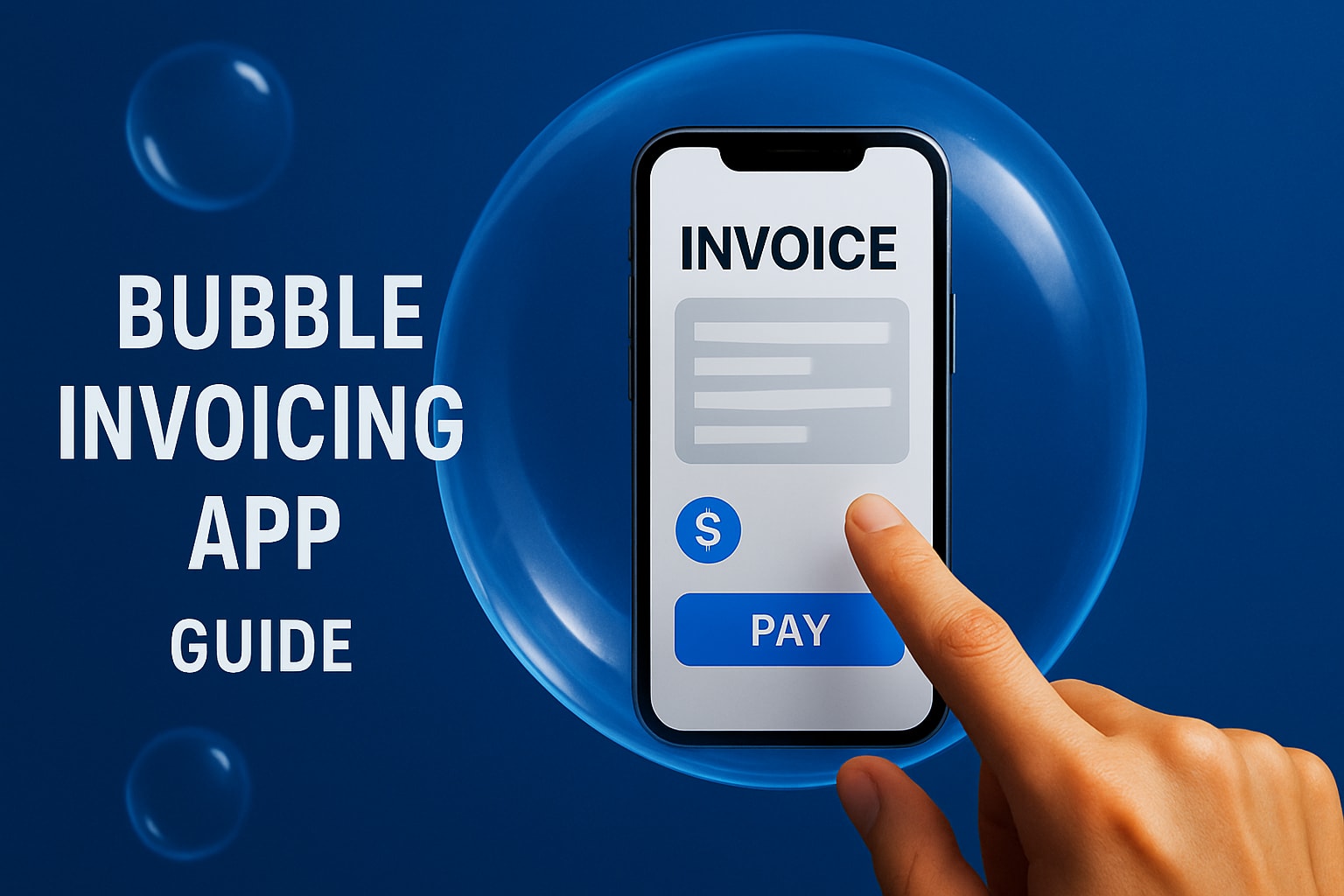

No-code platforms have empowered founders in 2026 to build digital products faster than ever. The surge in demand for custom solutions means that even non-technical leaders can now launch robust tools without hiring developers.
This handbook breaks down exactly how you can create your own bubble invoicing app, step by step, using Bubble.io. You do not need any coding skills to follow along—just a vision for your business and the drive to take control.
Inside, you will learn what invoicing apps do, the must-have features, why Bubble.io is an ideal choice (and where it has limits), the full build process, common mistakes to avoid, how much time and money to budget, and inspiring success stories. Ready to build your bubble invoicing app? Book a free discovery call to get started.
What an Invoicing App Is
In today's digital landscape, an invoicing app is essential for any founder or business owner seeking efficiency. The bubble invoicing app is designed to simplify how you create, send, and track invoices, removing manual steps and reducing errors.

Definition and Purpose
An invoicing app is a digital tool that automates the process of creating, sending, and managing invoices. It enables startups, freelancers, and SMEs to handle billing tasks efficiently. The main purpose of a bubble invoicing app is to streamline payments, reduce paperwork, and ensure timely transactions.
Manual invoicing often means creating documents in Word or Excel, sending emails, and manually tracking payments. With a bubble invoicing app, this entire workflow is automated:
- Invoices are generated instantly.
- Clients receive invoices by email.
- Payment reminders and receipts are sent automatically.
This shift to automation is why 70% of SMEs now use digital invoicing for efficiency. Globally, the economic impact of e-invoicing is significant, potentially unlocking billions in productivity gains, as highlighted in E-Invoicing Could Unlock $116 Billion for the U.S. Economy.
Key Benefits for Businesses
A bubble invoicing app offers major benefits for business operations. First, it saves valuable time and reduces billing errors, as calculations and data entry are automated. This directly improves cash flow, with businesses experiencing faster payment cycles.
Branding is another advantage. Customisable invoice templates let you add your logo and colours, ensuring a professional look. For example, a founder who automated invoicing with a bubble invoicing app reduced admin time by 40 percent and impressed clients with consistent branding.
The impact is measurable. Digital invoicing can reduce payment delays by 30 percent, helping businesses stay financially healthy and competitive in their markets.
Invoicing App User Roles and Workflows
A well-designed bubble invoicing app supports multiple user roles. Common roles include:
- Admin: oversees all app functions and data.
- Accountant: manages invoice creation and payment tracking.
- Client: views and pays invoices.
The typical workflow in a bubble invoicing app covers invoice creation, sending, tracking, payment collection, and reminders. Permissions are set so users only access what they need, keeping sensitive data secure.
For example, an admin sets up the system, an accountant issues invoices, and clients receive notifications to pay. Audit trails log every action, supporting accountability and easy reporting. This structure ensures transparency and efficiency for growing businesses.
Core Features of an Invoicing App
A successful bubble invoicing app is built on a foundation of essential, advanced, and secure features. Understanding what to include ensures your app meets user needs, stands out in the market, and scales as your business grows. Let us break down the must-haves for your project.

Essential Functionality Checklist
Every bubble invoicing app should start with a solid set of core features. These are the building blocks that let users manage billing efficiently.
- Invoice creation and customisation: Generate, edit, and personalise invoices for each client.
- Client and contact management: Store client details, track communications, and manage contacts from one place.
- Payment tracking and integration: Monitor outstanding payments, link to gateways, and keep records up to date.
- Automated reminders and notifications: Set up email or in-app alerts for upcoming or overdue payments.
- Downloading and sharing invoices: Export invoices as PDF or share via email in a few clicks.
A bubble invoicing app with these basics streamlines manual billing, reduces errors, and lets founders focus on business growth. Prioritise these for your MVP to deliver immediate value.
Advanced Features for Growth
As your business or client base expands, scaling your bubble invoicing app with advanced features becomes crucial.
- Recurring invoices and subscriptions: Automate regular billing for repeat customers.
- Multi-currency and tax handling: Support global clients and handle complex VAT or GST rules.
- Analytics and reporting dashboards: Visualise cash flow, payment trends, and overdue invoices at a glance.
- Integration with accounting tools: Sync with platforms like Xero or QuickBooks for seamless bookkeeping.
- Mobile access and responsive design: Ensure users can manage invoices on any device.
Many successful apps, such as those featured in 10 startups built with Bubble, leverage these advanced features to gain a competitive edge. Adding them positions your bubble invoicing app for long-term success.
Security, Compliance, and Scalability
Protecting sensitive financial data is non-negotiable for any bubble invoicing app. Build trust with robust security and compliance features.
- GDPR compliance: Respect user privacy, manage consent, and store data only as necessary.
- Data encryption and secure storage: Use SSL and encrypted databases to safeguard client information.
- Scalability: Design your app to handle hundreds or thousands of invoices per month as your business grows.
- User permissions and audit trails: Control access and track all actions for accountability.
Did you know that 85 percent of customers now prioritise data security when choosing billing apps? A bubble invoicing app that delivers on compliance and scalability is primed for growth in 2026.
Why Use Bubble.io for Your Invoicing App (and Its Limits)
Building a bubble invoicing app empowers founders and product owners to launch digital products without writing code. Bubble.io stands out as a popular no-code platform, making app development accessible, faster, and more cost-effective than traditional coding. Here is why it is the tool of choice for so many non-technical founders in 2026.

Advantages of Bubble.io for Non-Technical Founders
Bubble.io offers a drag-and-drop interface, letting you build a bubble invoicing app visually instead of coding. This means you can rapidly prototype, test, and deploy your app with minimal technical barriers.
Cost savings are significant. Compared to hiring developers or agencies for custom builds, Bubble.io is budget-friendly. Its active community provides support, and a wide template ecosystem accelerates your start.
For example, one founder launched a bubble invoicing app MVP in under a month, validating their idea quickly and at a fraction of the usual cost. This speed to market is a crucial advantage for startups and SMEs aiming to stay ahead.
Limitations and Considerations
Despite its strengths, Bubble.io comes with some limits when building a bubble invoicing app. Handling large datasets can impact performance, and complex custom code or third-party integrations may be challenging. The platform relies on plugins, but not all features are available, and plugin limits are a common concern for 60% of users.
Another factor is platform lock-in. Exporting your app or moving data to another system can be restrictive. For a deeper analysis of these trade-offs, see this Bubble pros and cons for founders guide.
Understanding these constraints helps you make informed decisions about scalability and future-proofing your bubble invoicing app.
How Minimum Code Can Help
Minimum Code is an official Bubble.io partner agency, specialising in bubble invoicing app builds for non-technical founders. They provide end-to-end support, from discovery and design through to development and launch.
With expertise in secure, scalable, and GDPR-compliant invoicing solutions, Minimum Code has helped over 30 clients bring their apps to life. Their team understands the nuances of invoice automation, payment integration, and reporting, ensuring your app meets both regulatory and business needs.
Success stories include rapid MVP launches and founders who have automated their invoicing processes with confidence. If you want tailored guidance and a smooth journey, book a free discovery call with their experts to get started on your own bubble invoicing app.
How to Build an Invoicing App in Bubble.io: Step by Step Guide
Building a bubble invoicing app is entirely achievable for non-technical founders. By following a structured approach, you can create a robust invoicing solution that automates billing, tracks payments, and supports your business growth. Let us walk you through each step, from planning to launch, so you can confidently deliver a professional app.

Step 1: Planning & Requirements
The success of your bubble invoicing app starts with a clear plan. Begin by defining user roles such as admin, accountant, and client. List the essential workflows: creating invoices, sending them, tracking payments, and managing reminders.
Prioritise features that are critical for your MVP. Must-haves typically include invoice creation, client management, payment tracking, and notifications. Nice-to-haves might be analytics or multi-currency support. Mapping out your data structure at this stage is crucial. Identify key data types: clients, invoices, payments, and users.
Visualise a typical user flow. For instance, an admin logs in, creates an invoice for a client, sends it, and monitors payment status. This clarity ensures your bubble invoicing app meets real business needs.
For a comprehensive planning approach, see this Step-by-step MVP app guide.
Step 2: Setting Up Your Bubble.io Project
To start your bubble invoicing app, sign up for a Bubble.io account and create a new project. You can choose a blank canvas or select an invoicing-related template from Bubble’s marketplace to accelerate your build.
Configure app settings early. Set strong privacy and security rules to protect sensitive financial data. Enable responsive design so your app works smoothly on all devices.
Organise your project by grouping pages and elements logically. For example, keep dashboard, invoice list, and settings in separate sections. Well-structured organisation streamlines collaboration and future updates.
Recommended templates often include invoice generator or CRM layouts, which you can customise for your bubble invoicing app. Remember to check for GDPR compliance settings.
Step 3: Designing the User Interface
A user-friendly interface is vital for your bubble invoicing app. Start with a main dashboard that summarises outstanding invoices, recent payments, and client activity. Build separate pages for invoice lists and detailed invoice views.
Create intuitive forms for adding new invoices and managing clients. Use visual cues, such as colour-coded statuses for paid or overdue invoices, to improve usability.
Customise branding by uploading your logo, selecting brand colours, and applying consistent fonts. This reinforces professionalism across your bubble invoicing app.
Here’s a simple UI layout example:
| Page | Key Elements |
|---|---|
| Dashboard | Invoice summary, quick links |
| Invoice List | Filter/search, status badges |
| Invoice Detail | Itemised breakdown, actions |
| Client Manager | Add/edit clients, contact info |
Always test your interface on mobile and tablet devices. Responsive design ensures users can access your bubble invoicing app wherever they are.
Step 4: Building Workflows and Logic
Workflows power the automation within your bubble invoicing app. Set up actions for creating, editing, and deleting invoices. Automate invoice numbering and due date calculations using Bubble’s logic tools.
Integrate payment tracking workflows. When a client pays, the app should update invoice status automatically. Set up automated reminders: trigger emails when invoices are overdue or when payment is received.
A typical workflow looks like this:
- User submits a new invoice form
- App generates an invoice number and sets due date
- Email notification is sent to the client
- Payment status is updated upon receipt
Use Bubble’s debugger to test workflows step by step. This ensures your bubble invoicing app behaves as expected and reduces errors before launch.
Step 5: Setting Up the Database
A well-structured database underpins every bubble invoicing app. Create data types for invoices, clients, payments, and users. Each invoice should be linked to a client and payment record for accurate tracking.
Set privacy rules so only authorised users can access or edit sensitive data. For example, clients should only see their own invoices, while admins have broader access.
Example database structure:
Data Type: Invoice
Fields: Invoice Number, Client, Amount, Status, Due Date, Payment Link
Efficient queries improve performance, especially as your bubble invoicing app grows. Regularly review and optimise your database relationships.
Step 6: Integrating Payments and Notifications
Integrate payment gateways like Stripe or PayPal to enable secure online payments directly from your bubble invoicing app. Bubble offers plugins for these services, simplifying the connection process.
Set up automated email and push notifications. Use Bubble’s workflow actions to send receipts upon payment, reminders for overdue invoices, or thank-you notes after successful transactions.
Test each integration thoroughly. Ensure payments are processed correctly and notifications reach users promptly. This builds trust and reliability into your bubble invoicing app.
Step 7: Launch, Testing, and Iteration
Before launching your bubble invoicing app, conduct beta testing with real users. Invite a small group to try the app, gather their feedback, and identify any usability issues or bugs.
Address feedback by refining features and fixing issues. Prepare your app for public launch by checking security settings, backing up data, and ensuring GDPR compliance.
Use a pre-launch checklist:
- Privacy rules reviewed
- All workflows tested
- Payment integrations verified
- Responsive design confirmed
- Data backups in place
After launch, continue to iterate. Add features based on user requests and monitor app performance. Regular updates keep your bubble invoicing app competitive and valuable.
Common Mistakes When Building Invoicing Apps in Bubble.io
Launching a bubble invoicing app is an exciting step, but many founders fall into avoidable traps that slow down progress or risk app performance. Recognising these common mistakes early will help you build a secure, scalable, and efficient solution.
Typical Pitfalls and How to Avoid Them
Overcomplicating your bubble invoicing app with too many features in the MVP can quickly overwhelm your timeline and budget. It is tempting to add every idea, but this often results in a cluttered product that confuses users. Focus on the core features your users need first.
Another frequent mistake is neglecting security and privacy settings. Failing to set strict privacy rules can accidentally expose sensitive invoice or client data. Always review Bubble's privacy settings and test access for different user roles.
A poor database structure can lead to slow performance as your app grows. For example, not linking invoices properly to clients or payments can make reporting and audit trails difficult. Plan your data types and relationships before building.
Finally, many founders forget to plan for scalability. If your bubble invoicing app gains traction, you need processes in place to handle hundreds of invoices per month without slowdowns. Early optimisation is essential.
Tips for a Smooth Build Process
Start by writing clear user stories and mapping out workflows. This will keep your bubble invoicing app focused on real user needs and prevent scope creep. Use Bubble’s documentation and the active community forums to solve technical challenges quickly.
Testing with real data and users should be a regular habit, not just a final step. Iterative feedback loops help you spot issues early and refine features before public launch. Document your build decisions, so future updates or handovers are straightforward.
For more practical advice on timelines and process, see these MVP development process insights, which can help you avoid costly mistakes as you progress.
Staying organised, involving users, and learning from each iteration will ensure your bubble invoicing app is robust, secure, and ready to scale.
Timeline and Cost Ranges for Bubble Invoicing Apps
Building a bubble invoicing app offers founders and product owners a rapid, cost-effective route to digital invoicing. The global shift towards automation is accelerating, and the e-invoicing market is set to quadruple by 2033, showing how vital these solutions have become for businesses of all sizes. Understanding development timelines and costs will help you plan your project with confidence.
Typical Development Timeline
Launching a bubble invoicing app is often much faster than traditional software builds. For most founders, a minimum viable product (MVP) can be completed in two to four weeks. This speed is possible thanks to Bubble.io’s visual editor, reusable components, and template marketplace.
Several factors influence your timeline. Complexity is key, as a basic app with simple invoicing features and Stripe integration will take less time than a solution with multi-currency support, analytics dashboards, and deep accounting integrations. Team size and prior Bubble experience also play a role—solo founders may move more slowly, while an agency or team can accelerate delivery.
Here’s a sample timeline:
| App Type | Planning | Build | Testing | Launch | Total Time |
|---|---|---|---|---|---|
| Basic MVP | 2 days | 10 days | 3 days | 2 days | 2–3 weeks |
| Advanced App | 4 days | 18 days | 6 days | 4 days | 4–5 weeks |
No-code platforms like Bubble.io enable apps to launch 60 percent faster than traditional approaches. With the projected e-invoicing market growth, speed to market can be a decisive advantage for your bubble invoicing app.
Cost Estimates and Considerations
Budgeting for your bubble invoicing app starts with Bubble.io’s subscription tiers. Most production apps require a paid plan, starting from £25 to £115 per month, depending on features and capacity. Optional costs include premium templates (£50–£200), plugins for payment gateways or analytics (£5–£30/month), and transaction fees from services like Stripe or PayPal.
Here’s a quick cost comparison:
| Item | DIY Approach | Agency/Freelancer |
|---|---|---|
| Bubble.io Plan | £25–£115/month | £25–£115/month |
| Templates/Plugins | £50–£250 (one-off) | £50–£250 (one-off) |
| Agency/Freelance Fees | £0 | £1,500–£6,000+ |
| Payment Gateway Fees | Variable | Variable |
Hiring an agency or expert is worth considering if your bubble invoicing app needs advanced features, strict compliance, or rapid scaling. Always factor in ongoing costs for maintenance, updates, and any extra integrations you plan to add. Careful budgeting will ensure your bubble invoicing app remains cost effective as you grow.
Examples of Invoicing Apps Built with Bubble.io
Explore how founders and teams have leveraged a bubble invoicing app to streamline billing, save time, and scale their operations. The rise in e-invoicing is evident worldwide, with platforms like Bubble.io making custom solutions accessible to non-technical founders.
Real-World Success Stories
One standout bubble invoicing app is "InvoiceFlow", a platform built by a UK-based SaaS startup to automate client billing. By adopting Bubble.io, the founder reduced admin time by 40 percent, enabling the team to focus on product growth. Key features included recurring invoices, Stripe integration, and real-time payment tracking.
Another example is "FreelancePay", created by a European freelancer collective. Using a bubble invoicing app, they quickly shifted from manual spreadsheets to automated digital invoicing. This reduced errors and improved payment speed. Clients rate the app 4.8 out of 5 for ease of use and reliability.
These stories mirror global trends in e-invoicing adoption. According to Peppol Statistics 2025, millions of businesses now process invoices electronically, demonstrating the scalability and reach possible with platforms like Bubble.io.
Inspiration and Feature Ideas
Top bubble invoicing app examples often showcase innovative features. Many offer custom branding, multi-currency support, and seamless integration with tools such as Xero or QuickBooks. Some stand out with user-friendly dashboards, analytics for overdue payments, or automated VAT calculations.
Unique UI approaches, like drag-and-drop invoice builders, help non-technical users feel confident. Integrations with accounting software and payment gateways are common, while audit trails and detailed reporting set leading apps apart in competitive markets.
Next Steps: Book a Free Discovery Call
Ready to create your own bubble invoicing app and streamline your business operations? Book a free, no-obligation discovery call with our founder Tom for tailored advice. Visit this contact page to schedule your session.
Get expert guidance on planning, building, and launching your invoicing solution. Benefit from proven strategies, rapid deployment, and ongoing support. Take the next step to turn your app vision into a reality with trusted Bubble.io specialists.
As you’ve seen throughout this guide, building your own invoicing app with Bubble.io is more accessible than ever—even if you don’t come from a technical background. By focusing on the essential features, security, and scalability, you can streamline your business processes and make invoicing hassle-free. If you’re ready to take the next step, I invite you to book a free discovery call with our team. We’ll discuss your goals, answer your questions, and help you map out a clear path to launching your app quickly and confidently. Let’s turn your vision into a reality together.
.avif)


Explore related articles

Ready to build your product?