
Bubble vs Base44: No-Code Platform vs Custom Agency (2026 Guide)
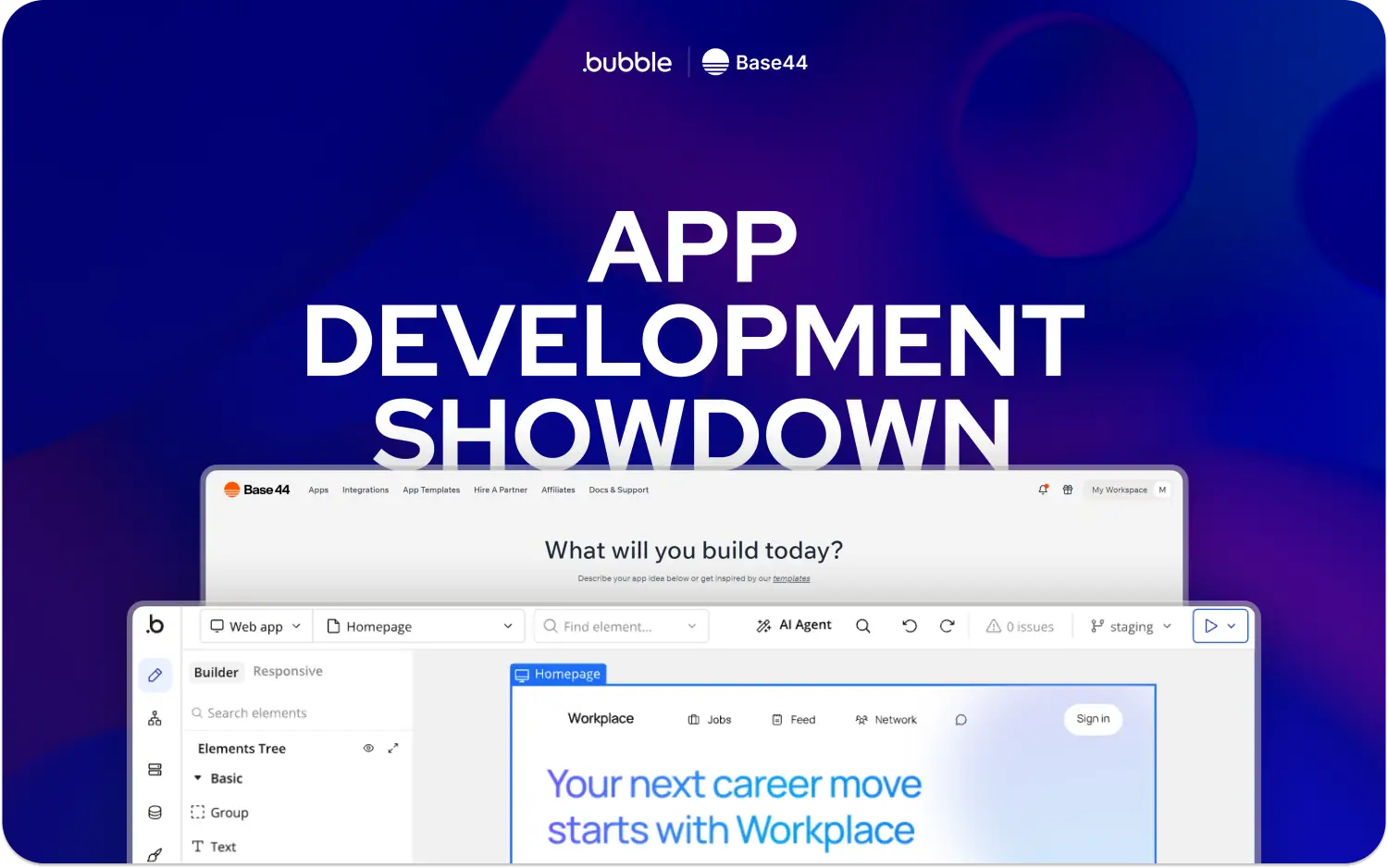

This comparison outlines two different approaches to application creation. Bubble operates as a visual no-code platform that allows teams to build and maintain web applications through configuration. Base44 operates as a development agency that delivers custom applications through traditional engineering workflows.
Bubble centers on a hosted platform with reusable components and usage-based pricing. Base44 centers on bespoke delivery with full control over code, infrastructure, and deployment. The distinction affects cost structure, delivery speed, and long-term ownership.
Quick decision guide
Bubble and Base44 differ by delivery model rather than capability. Bubble provides a subscription platform where teams create and update applications internally. Base44 delivers custom applications as scoped projects with dedicated engineering resources.
Bubble aligns with projects that require faster iteration and lower upfront cost. Base44 aligns with projects that require fully custom architecture, formal delivery processes, and tailored infrastructure.
The choice depends on whether a platform-based approach or a custom engineering engagement better matches project scope, budget, and internal resources.
Comparing your options
The choice between Bubble and Base44 reflects two different development models. Bubble functions as a no-code platform where teams configure applications inside a hosted environment. Base44 operates as a development agency that delivers applications through custom engineering work.
Bubble emphasizes platform ownership, faster setup, and ongoing self-management. Base44 emphasizes bespoke architecture, dedicated delivery, and external execution. These differences affect cost structure, delivery speed, and long-term control.
Teams that compare Bubble with agency-led development often review other platform-based options as well. A broader overview appears in this Bubble alternatives guide, which outlines how platform tools differ from service-based delivery models.
Criteria breakdown
The comparison uses qualitative attributes rather than numeric scoring. Each attribute reflects observable platform or service characteristics rather than performance rankings.
Development model matters because it defines who controls delivery and iteration. Bubble places control with internal teams through configuration tools. Base44 places delivery responsibility with an external provider.
Architecture scope influences long-term flexibility. Bubble applications operate within platform limits. Base44 projects define architecture at the code and infrastructure level.
Cost structure affects predictability. Bubble costs scale through usage and plan limits. Base44 costs depend on project scope, timelines, and support agreements.
Ownership determines exit options. Bubble limits application portability. Base44 delivers transferable code and infrastructure.
Bubble: The visual programming powerhouse
What Bubble is best known for
Bubble is a no-code platform for building web applications through visual configuration. It allows teams to define user interfaces, database structures, and application logic without writing traditional backend code. The platform targets startups, internal tools, and SaaS-style products that require custom workflows and data models.
Bubble combines frontend layout tools with backend logic inside a single hosted environment. Application features rely on workflows, database rules, and condition-based actions defined through the editor. Hosting, deployment, and security certificates are handled by the platform.
Bubble supports team collaboration through shared projects and role permissions. The platform also offers an extension marketplace that adds integrations and UI components, though feature depth varies by plugin.
Bubble features
The editor includes a visual page builder with responsive layout controls. Designers can define reusable elements, conditional visibility, and device-specific layouts. Custom styling supports CSS input within platform constraints.
The database system supports relational data types, privacy rules, and server-side validation. Data access depends on defined rules rather than direct queries. Export options include structured data formats but exclude application logic.
Workflow logic uses event-based triggers with conditional branches. These workflows can respond to user actions, data changes, and scheduled events. API connections support REST endpoints through a configuration interface rather than direct code execution.
User authentication includes email and password flows, OAuth options, and role-based access. Version history allows rollback to prior states, though it does not mirror full Git-style branching. Deployment uses managed infrastructure rather than custom pipelines.
Bubble capabilities
- Visual configuration of frontend and backend logic within one platform
- Hosted database with relational structures and access rules
- Event-driven workflows for application behavior
- Built-in authentication and permission management
- Managed hosting with automatic SSL and updates
- Plugin-based extensions for integrations and UI components
Bubble limitations
- Advanced applications require deep understanding of database rules and workflow structure. Complexity increases as features and conditions expand.
- Performance depends on workflow design and data access patterns. High-traffic or computation-heavy use cases may require careful optimization within platform limits.
- Migration options remain limited. Data export is available, but application logic requires manual rebuild on other platforms.
- Native mobile app output is not included. Applications run as responsive web apps unless wrapped by external tools.
Bubble platform characteristics
Bubble suits projects that need custom web applications without direct code ownership. It supports rapid iteration inside a controlled environment. Flexibility exists within platform boundaries rather than at the infrastructure level.
The platform favors configuration over extension. Teams trade low setup effort for reduced architectural control. Long-term scalability depends on usage patterns, pricing tiers, and workflow efficiency. For projects requiring professional design services, combining Bubble's capabilities with expert UI/UX implementation creates powerful results.
Bubble community reviews
Public discussion channels include forums, documentation, and third-party tutorials. Community content focuses on workflow design, database patterns, and performance practices.
Feedback often references fast prototyping and feature breadth. Common concerns relate to learning curve, pricing at scale, and migration effort.
Community plugins vary in quality and maintenance status. Teams typically validate extensions before production use.
Bubble pricing
Bubble uses a plan-based model with usage limits. A free tier supports learning and prototyping with platform branding. Paid plans remove branding and increase capacity.
As of January 2026, plans include Starter, Growth, Team, and Enterprise tiers with pricing based on capacity and features rather than per-user seats. Costs scale with workload usage and add-ons.
Current pricing details appear on Bubble’s official pricing page.
Base44 custom development agency
What Base44 is best known for
Base44 operates as a UK based digital agency that delivers custom web development services. The company focuses on bespoke builds rather than reusable platforms or templates. Projects typically involve traditional frontend and backend development with code ownership transferred to the client.
Base44 works across websites, web applications, and e commerce systems. Service scope varies by project definition, timeline, and budget rather than by platform limits.
Base44 services and capabilities
Base44 provides design, development, and technical delivery under a project based model. Each application is built to specification rather than configured from predefined components. Technology choices depend on project requirements rather than a fixed stack.
Development work can include custom CMS builds, API integrations, and tailored user interfaces. Functionality depends on agreed scope and technical feasibility within budget constraints. Hosting, infrastructure, and maintenance arrangements vary by client agreement.
Security, accessibility, and compliance requirements are addressed at the project level. Implementation reflects client needs rather than standardized defaults.
Base44 attributes
- Custom coded applications with full code ownership
- Project scoped development rather than subscription access
- Technology selection based on requirements
- Direct collaboration with a dedicated delivery team
- Support for bespoke integrations and workflows
Base44 limitations
Project timelines tend to extend longer than no code alternatives. Discovery, design, development, and testing phases follow a structured sequence. Iteration speed depends on change requests rather than immediate self service edits.
Costs reflect custom development effort. Budget increases when scope expands or requirements change. Ongoing updates require continued developer involvement.
Clients rely on the agency for technical changes. Internal teams without development expertise may face delays when priorities shift.
Base44 delivery characteristics
Base44 suits organizations that require tailored functionality or specific technical architectures. The model favors planned releases over rapid experimentation. Flexibility exists at the code level rather than the interface level.
Control remains high over architecture and data. Responsibility for maintenance and evolution remains shared between client and agency.
When you need comprehensive development services with the efficiency of no-code platforms, specialized agencies can deliver both.
Base44 community reviews
Public feedback focuses on structured delivery and direct communication. Commentary often references alignment between specifications and final output.
Neutral observations highlight the importance of clear requirements and defined scope. Outcomes vary based on planning depth and ongoing collaboration.
Base44 pricing approach
Base44 uses project based pricing rather than fixed plans. Costs depend on application size, technical complexity, and delivery timeline.
Indicative public references place smaller projects in the low thousands of pounds, while complex systems extend significantly higher. Exact figures depend on scope definition and support arrangements.
Pricing details are typically confirmed through direct consultation rather than published rate cards.
Alternative solutions worth considering
Minimum Code professional no code implementation
Minimum Code provides implementation services for teams that choose no code platforms but prefer external delivery. The company focuses on Bubble based projects delivered under defined scopes rather than self service use. This option suits teams that want platform speed without internal platform ownership. Our Bubble agency services deliver enterprise-quality applications at a fraction of traditional agency costs and timelines.
Webflow design focused web development
Webflow supports visual website creation with emphasis on layout control and content presentation. The platform fits marketing sites, content heavy pages, and brand driven projects rather than logic heavy applications. CMS features support editorial workflows and structured content. Visit Webflow agency services for design-centric web development needs.
FlutterFlow mobile focused application development
FlutterFlow targets native mobile app creation for iOS and Android through a visual interface. Output compiles to Flutter code and supports mobile specific features. This option fits teams that prioritize app store distribution over browser based delivery. If you need mobile development with native capabilities, FlutterFlow provides an excellent alternative to custom coding.
Retool internal business tools
Focuses on building internal tools and admin panels quickly, offering more advanced functionality for business applications than traditional platforms with better integration capabilities and robust feature sets. Platform selection should align with primary use case, whether that's web apps, mobile apps, or internal tools, as integration requirements often determine platform viability more than core features.
Frequently asked questions
Which platform offers stronger cost predictability
Cost structure depends on delivery model rather than platform alone. Bubble uses subscription pricing tied to usage and features. Agency based development relies on scoped project fees and ongoing support agreements. Long term cost varies based on iteration frequency and maintenance needs.
Is migration from Bubble to custom code possible
Migration remains possible but requires rebuild work. Data export works through APIs and structured downloads. Application logic and interface behavior require manual recreation in code. Planning for redesign reduces later friction.
How timelines differ across options
No code platforms allow faster early delivery for standard features. Custom development follows structured phases that extend delivery time. Highly specific requirements may reduce speed differences. Timeline reflects scope clarity and change frequency.
How scalability differs between approaches
Custom code allows architectural control and targeted optimization. Bubble supports many growth scenarios within platform limits. Performance depends on application design and data usage patterns. Platform constraints appear under specialized workloads.
What technical involvement each option requires
Bubble requires understanding of logic, data structure, and interface rules. No traditional coding knowledge is required. Agency delivery requires requirement definition and review rather than technical execution. Internal technical oversight improves outcomes but remains optional.
Final thoughts
The choice between Bubble and Base44 reflects differences in delivery model, cost structure, and technical ownership. Bubble supports application development through a managed platform that emphasizes speed, iteration, and predictable subscription pricing. This approach fits projects that value rapid deployment and platform managed infrastructure over deep customization.
Base44 follows a custom development model with direct control over architecture and implementation. This approach supports highly specific requirements and tailored performance characteristics. It also introduces higher upfront costs and longer delivery timelines tied to scoped project work.
Platform selection depends on constraints related to budget, delivery speed, internal expertise, and long term maintenance expectations. Each option addresses different operational needs rather than serving as a direct replacement for the other.
.avif)


Explore related articles


Ready to build your product?