
Custom Software Development: Expert Step-by-Step Guide (2026)

In 2026, almost 80% of startups say software is their biggest expense in the first year. For non-technical founders, figuring out how to build custom software in 2026 can feel overwhelming.
You know your market and how to grow a business, but technical jargon, high costs, and slow launches can make the process risky. Not sure where to start or who to trust? You are not alone.
This guide explains how to build custom software in 2026 step by step. You will learn how to plan, pick the right tech (including no-code and low-code), assemble your team, design, build, launch, and maintain your app.
If you want clarity, confidence, and control over your software investment, follow this guide. You will find practical advice and proven steps that help you avoid costly mistakes.
Step 1: Define Your Business Goals and Software Requirements
Building the right software starts with a clear plan. Before you touch any code, you need to understand your business goals and what your users truly need. This first step in how to build custom software in 2026 ensures you invest in the right features, avoid costly mistakes, and set your project up for success.

Understand the Problem You're Solving
Every successful app starts by solving a real problem. To answer how to build custom software in 2026, start with user research. Talk to your target customers. Use interviews, surveys, and competitor analysis to find their biggest pain points.
For example, if you are a fitness founder, speak with trainers and clients to see what they lack in current coaching platforms. Are they frustrated by slow scheduling or poor progress tracking? Data shows 42% of failed startups did not address a true market need (CB Insights, 2024).
List your findings. Document the top three problems users face. This will guide your entire project and help you avoid building features nobody wants. Understanding the real problem is step one in how to build custom software in 2026.
Set Measurable Objectives
Once you know the problem, define what success looks like. For how to build custom software in 2026, set clear, measurable objectives. Do not just focus on features. Instead, tie goals to business outcomes.
For example:
Use KPIs that matter to your business. This approach helps you prioritise features and track progress. If you are budgeting for your project, the SaaS Application Development Costs 2026 guide breaks down typical costs and can help you set realistic financial targets.
Setting measurable objectives is a key part of how to build custom software in 2026, especially for founders investing their own money.
Map Out Core Features and User Stories
Now, turn your objectives into features. Start by listing 'must-have' and 'nice-to-have' items. Use simple user stories to keep the focus on the user:
Prioritise with the MoSCoW method:
PriorityDescriptionMust-haveEssential for launchShould-haveImportant, but not vitalCould-haveNice to include if time allowsWon't-haveNot for this release
This structure keeps your project lean and focused. Mapping features and user stories is fundamental in how to build custom software in 2026, ensuring you deliver value fast.
Plan for Compliance, Security, and Scalability
From day one, plan for legal and technical challenges. For how to build custom software in 2026, this means knowing your GDPR obligations if you handle EU user data. Document what personal data you collect and why.
Think about scalability early. Choose platforms that can grow with your user base, such as cloud hosting or scalable databases. For example, apps handling health data need advanced encryption and extra security checks.
Create a checklist:
Addressing compliance, security, and scalability is not optional. It is a critical part of how to build custom software in 2026 and protects your business from risk.
Step 2: Choose the Right Development Approach for 2026
Choosing the right approach is one of the most critical steps when you are learning how to build custom software in 2026. The options you select will shape your costs, timeline, and long-term flexibility. Let us break down the main routes available for modern founders.
Compare Traditional, Low-Code, and No-Code Options
When considering how to build custom software in 2026, you will face three main paths: traditional coding, low-code, and no-code platforms. Each has distinct strengths and trade-offs.
ApproachCostSpeedFlexibilityMaintenanceTraditionalHighSlowMaximumComplexLow-CodeMediumFastGoodEasierNo-CodeLowFastestModerateSimplest
Traditional coding offers complete control but is expensive and slow. Low-code and no-code tools like Bubble.io can cut MVP launch time by up to 70 percent, making them ideal for non-technical founders. However, they may have some limits on deep customisation. Weigh your priorities as you decide how to build custom software in 2026.
Evaluate Platforms and Tools for Your Needs
Once you know your approach, the next step in how to build custom software in 2026 is picking the right platform. In 2026, leading options include Bubble.io for web and mobile apps, Xano for scalable backends, and Webflow for design-focused sites. For a full breakdown of the best no-code development platforms across every category — web apps, mobile, backends, and automation — that guide covers 25 tools with clear selection criteria.
Consider factors such as:
Decide: Build In-House, Hire Freelancers, or Partner with Experts
After selecting your platform, you need to decide who will actually build your product. For those researching how to build custom software in 2026, the main options are:
If you lack technical leadership, working with a trusted agency can reduce risk and get your project off the ground faster. Whichever route you choose, match the team's experience to your chosen platform.
Assess Long-Term Maintenance and Scaling
A key part of how to build custom software in 2026 is planning for the future. Most software costs arise after launch, not before. You need to factor in:
Studies show that 60 percent of an app's costs come post-launch. Good documentation and clear code or workflows make scaling and maintenance easier as your user base grows.
How Minimum Code Can Help: Bubble.io Experts for Fast, Secure Launches
If you want expert support on how to build custom software in 2026, Minimum Code can help you launch web and mobile apps quickly using Bubble.io and Xano. Their end-to-end service covers discovery, design, development, and launch, with a focus on GDPR compliance and EU hosting.
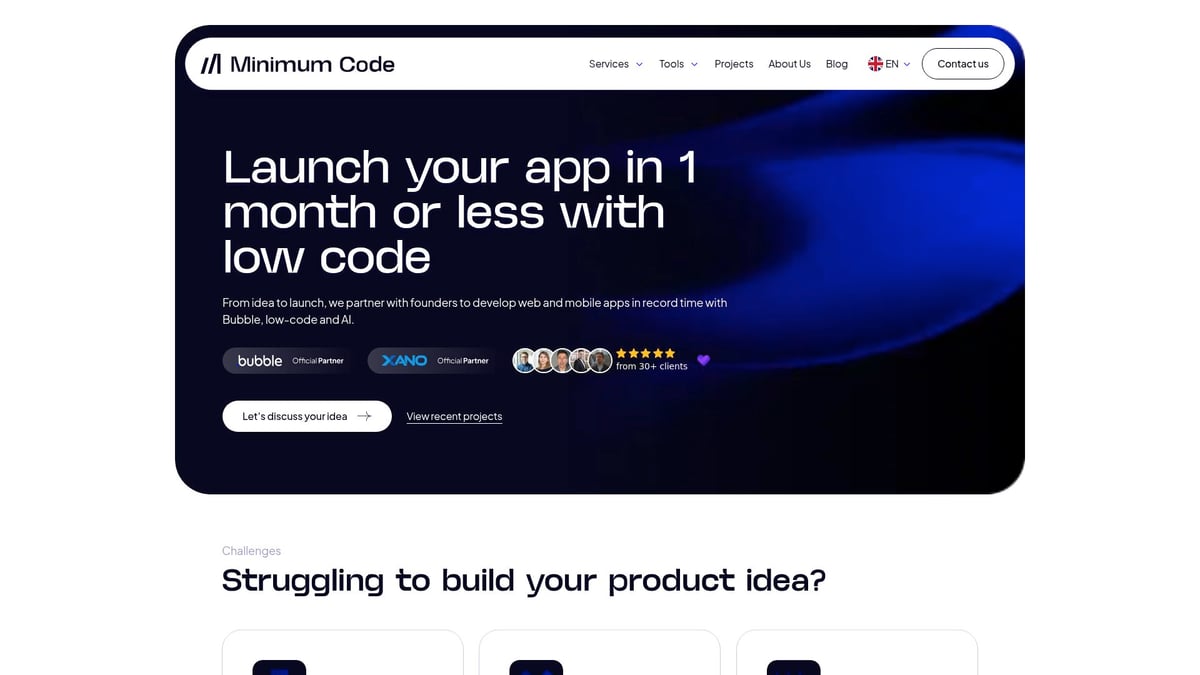
Minimum Code is an official Bubble and Xano partner, trusted by European startups. They are ideal for non-technical founders who value speed, quality, and reliable support. With a proven track record, they can make your software journey smoother and more predictable.
Step 3: Assemble Your Team and Project Plan
Building the right team is critical when deciding how to build custom software in 2026. The choices you make now set the foundation for your app's speed, quality, and long-term success. For non-technical founders, knowing which roles matter and how to manage the project can make the difference between a smooth launch and costly delays.

Define Key Roles and Skills Needed
To understand how to build custom software in 2026, start by mapping out the essential team roles. At a minimum, you need a product owner to represent your vision, a UI/UX designer to ensure usability, a developer or no-code specialist to build the app, and a quality assurance (QA) tester. For larger projects, a project manager helps keep everything on track. With no-code and low-code tools, you can often launch with just two or three core team members, making it faster and more cost-effective to get started.
Select the Right Talent: Hiring, Outsourcing, or Agency
Choosing the right people is a major decision in how to build custom software in 2026. You can hire employees, find freelancers, or partner with a specialist agency. Look for proven expertise, especially with platforms like Bubble.io. Check certifications and portfolios, and consider time zones and language fit if your market is in Europe. To learn more about rapid team assembly and MVP launches, see this guide to building an MVP with no-code. The right talent will accelerate your launch and reduce risk.
Create a Realistic Timeline and Budget
Setting a clear timeline and budget is essential for anyone learning how to build custom software in 2026. Break your project into phases such as discovery, design, development, testing, and launch. Use time-boxed sprints to keep progress steady, and always include a buffer for unexpected challenges. For no-code projects, MVPs can often be delivered in four to eight weeks, helping you manage costs and speed to market. Track expenses closely and tie spending directly to business goals, not just features.
Set Up Project Management and Communication Tools
Effective teamwork is at the heart of how to build custom software in 2026. Use tools like Trello or Jira for task management, Slack or Microsoft Teams for communication, and Figma for design collaboration. Notion can centralise documentation and feedback. Establish regular check-ins to address issues early, and keep all project details transparent. Teams using agile tools and clear communication report up to 30 percent faster delivery, making these systems a smart investment from day one.
Manage Risks and Expectations
Managing risks is a core part of how to build custom software in 2026. Start by listing common risks like scope creep, unclear requirements, or communication breakdowns. Set clear milestones, deliverables, and timelines, and keep stakeholders informed with regular updates. Transparency and realistic expectations help prevent surprises. By identifying challenges early and maintaining open channels, you'll keep your project on track and your team motivated through every phase.
Step 4: Design and Prototype Your Application
Design and prototyping are where your vision starts to feel real. For founders looking at how to build custom software in 2026, this stage is about translating business needs into a product users love. A strong design process helps avoid costly changes later and sets your app up for long-term success.

Focus on User Experience (UX) and User Interface (UI)
Start every project with clear user flows and wireframes. In how to build custom software in 2026, prioritising intuitive navigation and clear calls to action is essential. Founders can use tools like Figma to map out screens, buttons, and information hierarchy.
A good UI is not about flashy visuals, but about making the user's journey effortless. Rapid prototyping means you can test ideas early and adjust before investing in development.
Validate Ideas with Clickable Prototypes
Clickable prototypes let you gather real feedback before a single line of code is written. For those learning how to build custom software in 2026, this is the fastest way to test assumptions and avoid guesswork.
Platforms like Figma and Bubble.io enable non-technical founders to build and test prototypes without coding. For a deeper dive into launching your MVP quickly, see Launch a SaaS MVP Without Coding, which outlines practical steps to move from idea to interactive prototype in weeks.
Ensure Accessibility and Inclusivity
Building accessible software is a requirement, not an option, for anyone serious about how to build custom software in 2026. One in five Europeans has accessibility needs, making inclusivity a business essential.
By considering accessibility from the start, you expand your user base and reduce the risk of costly retrofits. Accessible design also improves usability for everyone, not just those with disabilities.
Plan for Branding and Visual Consistency
Consistent branding builds trust and helps your app stand out. As you approach how to build custom software in 2026, define your visual identity early.
A design system can save time as your app grows. It allows new features to blend seamlessly with existing ones, making updates easier and reducing confusion for users.
Prepare for Handoff to Development
A smooth handoff prevents costly miscommunication and delays. For those navigating how to build custom software in 2026, clear documentation is as important as good design.
Provide developers with all files, guides, and feedback from user testing. This ensures your vision is accurately translated into the final product and reduces back-and-forth during development.
Step 5: Build, Test, and Launch Your Software
Launching your product is the moment when all your preparation and planning become reality. For founders who want to know how to build custom software in 2026 without technical headaches, this step is where your vision comes to life. Let's break down the process into manageable stages so you can launch with confidence and avoid common pitfalls.
Set Up Your Development Environment
Before you start coding or building, set up your workspace for efficiency and safety. For those learning how to build custom software in 2026, this means choosing the right platforms (like Bubble.io or Xano), setting up separate test and production environments, and making sure you have reliable backups.
Use version control tools to track changes, so you can recover quickly if something goes wrong. Cloud-based platforms often offer built-in backup and restore features, which are essential for reducing risk. Take time to document your setup so anyone joining your project later can get up to speed.
Develop Core Features Iteratively
Focus on building only the essential features first. If you are wondering how to build custom software in 2026 with speed and efficiency, start with a minimum viable product (MVP). This means prioritising must-have functions like onboarding, payments, or dashboards. Following a proven step-by-step approach to developing your MVP helps you focus on what matters, gather real user feedback fast, and avoid wasting budget on features nobody asked for.
Work in short cycles or sprints. After each sprint, review progress and gather feedback. This approach helps you avoid overbuilding and keeps your project aligned with real user needs. Regular demos can also help spot issues early and keep stakeholders engaged.
Integrate Essential Third-Party Services
No app stands alone. As you learn how to build custom software in 2026, you'll need to connect your software to payment gateways, analytics, authentication, and notification services. Popular choices include Stripe for payments and Google Analytics for tracking.
Choosing between no-code and low-code tools can impact how easily you add these integrations. For a detailed comparison, see this No-Code vs Low-Code Development Comparison. Using plugins or APIs can speed up integration, but always check for GDPR compliance and data protection.
Test Thoroughly: QA, UAT, and Security
Testing is not optional. If you want to master how to build custom software in 2026, invest time in thorough quality assurance (QA), user acceptance testing (UAT), and security reviews.
Test your software for functionality, usability, and performance. Involve real users in UAT to catch issues you might miss. Security testing is especially important if you handle personal or payment data. Fixing bugs before launch is far cheaper and protects your reputation.
Prepare for a Successful Launch
A smooth launch is crucial for first impressions. When considering how to build custom software in 2026 for a public rollout, set up monitoring tools to track errors and usage from day one. Create a detailed launch checklist, including roll-back plans in case something goes wrong.
Consider a soft launch with a limited group of users. This helps you spot last-minute issues and gather early feedback. Set up support channels so users can report problems quickly, and keep your team ready to respond.
Plan for Customer Support and Feedback Loops
Support does not end at launch. To truly succeed in how to build custom software in 2026, set up a helpdesk, FAQs, and direct support options. Early users are your best testers and can help you spot issues or opportunities for improvement.
Gather feedback continuously and make small, regular updates. This keeps your users engaged and your app evolving. A responsive support process will build trust and encourage referrals as your product grows.
Step 6: Maintain, Scale, and Improve Your Software
Launching your app is just the beginning. For founders learning how to build custom software in 2026, ongoing maintenance and improvements are critical for long-term success. This step will guide you through monitoring, updating, scaling, and keeping your software secure and compliant.
Monitor Performance and User Metrics
Effective monitoring is essential when you want to master how to build custom software in 2026. Start by setting up analytics tools to track user activity, feature adoption, and retention rates. Tools such as Datadog, Sentry, or Bubble.io analytics can help you spot issues before they affect users.
Pay close attention to critical metrics:
Regularly review these metrics to prioritise improvements. Early detection of errors or slowdowns keeps your users happy and reduces support costs.
Schedule Regular Updates and Bug Fixes
Committing to regular updates is a core part of how to build custom software in 2026. Prioritise critical bugs and security patches as soon as they are discovered. Schedule monthly or bi-weekly update cycles to keep your software fresh and secure.
Adopt a system for collecting user feedback, such as in-app surveys or a helpdesk. Use this input to guide your roadmap, focusing on improvements that add the most value.
Remember, apps updated monthly retain 30% more users, so make updates a habit. This approach helps build trust and keeps your product competitive.
Plan for Scaling Users and Features
Growth is often the goal for founders exploring how to build custom software in 2026. As your user base increases, optimise your database, APIs, and hosting to handle higher demand. Platforms like Xano can support scalable backends, while cloud solutions offer flexible resources.
If you need to scale quickly, monitor your system's limits and plan migrations before you hit bottlenecks. Following a clear 6-step MVP development process from the start makes it much easier to scale your software systematically as you grow — rather than retrofitting a structure that was never built for it. For a broader view of industry trends and growth strategies, review the Custom Software Development Market Growth to see how other startups are scaling their solutions.
Evaluate when to move from no-code to custom code if your platform's limits are reached. Proactive scaling ensures a smooth user experience as you grow.
Ensure Ongoing Compliance and Security
Staying compliant and secure is non-negotiable for anyone learning how to build custom software in 2026. Keep up to date with GDPR and European data protection laws. Schedule regular security audits and penetration tests, especially if your app handles sensitive data.
Key steps include:
For fintech, health, or other regulated sectors, compliance is a must. Continual vigilance protects your reputation and your users.
After exploring the essential steps to build secure, scalable software in 2026—planning, design, development, and launch—you might still have questions about your unique journey. Every founder's path is different, and sometimes, talking through your specific goals or challenges can bring real clarity. If you're wondering how these strategies apply to your product idea, or you want tailored advice on using platforms like Bubble io, let's connect. I'm here to help you start strong and move forward with confidence.
Discuss your product idea
.avif)


Explore related articles

Ready to build your product?